

An Oral History of School Desegregation in Franklin County, N.C.
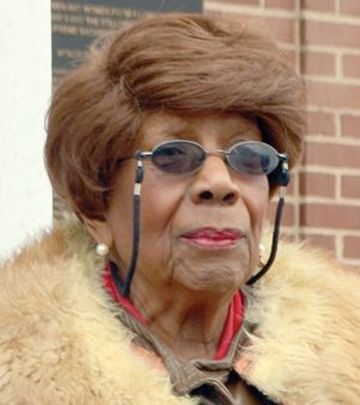
Interviewee: Edith Anderson
Interviewer: Maurice C. York
Interview Date: May 21, 2015
Location: Louisburg, N.C.
Length: 01:06:42
Audio Excerpt
Maurice York: My name is Maury York. Today is May 21, 2015 and I am interviewing Ms. Edith Anderson for an oral history of school desegregation in Franklin County, North Carolina, sponsored by the Tar River Center for History and Culture at Louisburg College with funding provided by the North Carolina Humanities Council. Mrs. Anderson is a retired public school teacher in the Franklin County Schools.
Ms. Anderson, thank you so much for being willing to talk with me today.
Edith Anderson: My pleasure.
MY: Let’s begin by you telling me a little bit about your background, where you were born, who your parents were, your education, and that kind of thing.
EA: Okay. I was born here in Franklin County [to] Alice Fuller Wilder – we haven’t been able to research her name, trying to – and Harvey Alston, and I was the last of ten children and we lived out on 401, out in the country, in the rural area, so to speak. For the first eight years – since this is about school – the first eight years I walked to school to a two-room school called Cedar Street School. It was not a street, it was a rural community, but they named it Cedar Street. The first, second, third, and fourth grades were on the lower level and the five, six, seven, and eighth grades were on the top level, so you felt very important when you got promoted to upstairs then, you know. The lower level teacher taught all the subjects and the upper level teacher taught all the subjects for the grades they had, first, second, third, and fourth, and then five, six, seven, and eight upstairs, and I remember that the teacher taught art out of a Sears and Roebuck catalog. That’s how I learned about the famous artists. I don’t know how she got them out of a catalog, but, anyway, [we learned] the Blue Boy and all that–
MY: Right.
EA: –out of the Sears catalog.
MY: That’s interesting.
EA: Mm hmm. We walked all of those years. Everybody walked to school, they didn’t ride the bus. Sometimes we were taunted by the persons who did ride the buses, you know, but that was okay.
MY: Now, Cedar Street, was that south of town or north of town?
EA: It was north of town.
MY: North of town.
EA: Uh huh, but it was just a few miles, maybe four or five miles from where I lived, but there were other people who lived in the surrounding area who lived farther than that and they had to walk also to school; no bus transportation. I rode the bus when I got in the ninth grade and we went to the high school.
MY: And where was that located?
EA: That was Franklin County Training School, at the time, where Louisburg Elementary was, and now it’s the offices for the superintendent and whatnot. It’s that location.
MY: Right.
EA: Then we rode the bus, and the bus had two seats on each side and one in the middle that you sat–. It was flat and you had to sit back-to-back, so the bus carried a lot of kids, you know. The books that we used were hand-me-downs always, never a new book, but if we did not care for that book we had to pay a damage fee, and we couldn’t understand, when it was already damaged, that we’d have to pay a damage fee, but that’s water under the bridge too.
MY: Now do you have any sense of why these books were used, where they came from?
EA: They came from other schools. We didn’t know the names of the people, but they came from other schools, and I don’t remember having a new book till we got–. I don’t know; even in high school we used used books. The information was still there, it was just used.
MY: How did you view your school? Was it a good experience to be at the–
EA: Well, when you don’t–
MY: –Franklin County Training School?
EA: –have anything to compare it with–. That was the only school that we went to. You know, you didn’t know what the others were like so you didn’t know the difference, until later, you know. Then later we said, “Oh! We could have had this,” or, “Oh, we should have had that,” you know.
MY: Right.
EA: Then we were put in classes by alphabet, and there were probably forty students to each class, like 9-A and 9-B, and the alphabet was divided probably something like that, from alphabet A to H, or something like that, [and so on.] Most of what we had was hand-me-down, to be truthful. Most of what we had were used this, used seats, used desks and all, but you could learn the same thing everybody else learned if you had it available to you.
MY: Right. Who were some of the teachers you remember?
EA: Oh, Mary Hill was probably the one–. She was very stern. She was the grammar, English teacher. Mrs. Conway taught French, and Mrs. Bradshaw taught math – to me, I’m speaking of – and several people taught music. You know, they had a choir. They didn’t teach music theory, just choir.
MY: Right.
EA: I didn’t take athletics. I didn’t play ball or stuff like that. We didn’t have PE. I’m trying to think who the PE teacher was. Whew! Now, that’s way, way back, because I left there in 1949. That’s when I graduated from high school, so it was ’45 to ’49, and my memory wanes a little.
MY: I understand. Where did you go to school after that?
EA: Oh, I went to St. Augustine’s for–. That’s where I graduated from, St. Augustine’s, and I went there three and a half years. I didn’t go the first semester but I had to kind of double up sometimes because my parents were–. They were not professional. My daddy actually worked at the college for thirty years, Harvey Alston. They gave him a tribute, the college did. My mother washed and ironed for families. So that’s how I went to school, and I also worked for a family, Dr. Bass, who was the veterinarian, and I used to go up there on Saturdays and clean and, you know, wash dishes and stuff.
MY: Was that here in Louisburg?
EA: Mm hmm, that was here in Louisburg. There was another family, I can’t think of their name, but I would go there on Friday evenings, and that’s how I kind of saved up money to go to school. Then I worked on campus after I got to St. Aug, worked in the laundry and helped to pay the tuition. Private school’s a little bit higher, and the reason I went to St. Aug is because my mother did not want me to live in the city. She wanted me to live on campus and at the middle of the year all the rooms were filled, you know, mostly, so St. Aug had empty rooms, so that’s the real reason I went to St. Augustine’s.
MY: Was that a good experience for you?
EA: Yes, yes, it sure was, and I went back the next year when I could have transferred somewhere else, but I kept going back to St. Aug. I liked the atmosphere there. It’s a religious school, maybe that’s why I liked it. It was quiet and everybody followed the–. Everybody followed the rules. [Laughs] Most everybody followed the rules and all. It was a nice, quiet setting and you went to class and there was no problem. Now, the faculty was integrated but the student body was not at that time.
MY: I see. What did you study at St. Aug’s?
EA: Well, the basic things. Everybody had to take some things, like speech. But I took music because that’s what I liked, but I had not had theory prior to that. I took piano from a lady in the city there but the theory part–. But anyway, I liked music well enough to, you know. Other kids came from schools that taught theory so I had to buckle down a little bit to keep up with them.
MY: Right.
EA: And of course the choir. I was never in the band or anything. I didn’t take – just vocal music, and piano. I did take piano, and I had to take organ because it was a requirement.
MY: I see.
EA: But I don’t play the organ, [Laughs] but I had to take it.
MY: Well I know you still play the piano.
EA: Yes, I do, yeah, and I enjoy doing that, and I do it for free, but I do play for a couple of churches, you know, did. But I enjoyed my career teaching kids, and they–. Music is a feeling-type subject. You know, some subjects are cut and dried but music kind of lingers on. It’s one of those kind of subjects, like poems or–. You know, what they call aesthetic?
MY: Right.
EA: I don’t know if that’s the right word. Anyway, you get different [Pauses] satisfaction from the arts than would be like from math,–
MY: Right.
EA: –or something like that.
MY: So you received a bachelor’s degree.
EA: Bachelor of Arts degree, mm hmm,–
MY: In music.
EA: –from St.–. Mm hmm, in music.
MY: What did you do when you finished?
EA: Okay, I was planning to go back to Connecticut, where I had been working, to go to school, and this man just popped in my yard and said, “Are you looking for a job?” Somebody sent him there, and I said, “I sure am.” It was a place called Rockingham, which I’d never heard of, in Richmond County. So I got on the bus and went to a place called Hamlet, because the bus did not run in Rockingham. Hamlet was a larger place or something so I had to get off the bus in Hamlet. Then I got a friend to take me down there, but the first time I went on the bus because the landlady, when I got there, thought I was from Lewisburg, Pennsylvania.
MY: Oh, my goodness.
EA: But we had to spell it. That Lewisburg is l-e-w-i-s and this one is l-o-u-i-s. So, I didn’t have a car or anything, so another lady from Henderson was my roommate and we walked to school, which was–. This was all in the city. It wasn’t the country. It wasn’t in the rural area; it was in the city. We walked to school, rain or shine, and after–.
MY: This was in Rockingham.
EA: This was in Richmond County, in Rockingham.
MY: Okay.
EA: There I taught English,–. The schools were small and you had to teach what was necessary, not necessarily your subject matter–
MY: Right.
EA –but whatever they didn’t have a teacher for. Schools were segregated then, of course. So I taught a little bit of health, no math. I refused to teach math because I just know how to spell math, that’s all.
MY: [Laughs]
EA: Then you’d have study–. At that time they had study periods. The schedules all changed, you know, but everybody had a study period, like one period was study for everybody and they just sat in there and studied. Of course then I had music, which was not an exact subject, not required like English and math and stuff like that. But I did have music class, and you could have the choir. If you could manage to work it in somehow we had the choir, and at that school I had a little group called tonettes. They don’t–. I don’t even guess they make it. It’s a little plastic–. It’s about as long as your hand. It was like a flutophone–
MY: Right.
EA –and we had one of those. We made time to have that, and I think I taught health. It’s been a long time ago, but I taught health too. We lived with a lady, rented a room in a little house, with just one of the people who lived nearby.
MY: Right. How long did you work in Rockingham?
EA Four years.
MY: Okay.
EA: Then I came to Wake County and I did just music at two schools. One was Lockhart and one was [Pauses] in Garner. I can’t think of the name of that school now, but that was in Garner. On Tuesday and Thursday I went to Lockhart, which was a junior high. That was not familiar to me, to have a junior high, grades up to nine, and in tenth grade they went to Shepard School in–. [Pauses] I can’t remember now where that school was, but it was in Wake County, and that was ten, eleven, and twelve, because we had up to nine.
MY: Right.
EA: They had a specific name for those schools that went ten through twelve. I can’t think of what they’re called. Junior high. No, maybe not junior high. Something like that, because the grades went one through nine and then–. Then today I would go to the one in Garner and the next two days I’d go to the one in Knightdale. That’s where Lockhart was, in Knightdale.
MY: I see.
EA: Then the next week I’d go three days to that school and two days to the next one, and then the next week you’d go three days to–. So you’d have to know, “Let’s see. Where am I supposed to go today?” [Laughs]
MY: Right.
EA: But anyway, it all worked out and I enjoyed it, and of course we tried to have a choir, vocal. I didn’t do instrumental, like band. I didn’t do anything like that. But we did have the little tonettes that had little fingerings, about as long as your hand. We had a concert. But I drove there every day. I didn’t stay [there.] I got up early in the morning and left, tried to get ahead of the buses.
MY: Now were you living in Louisburg–
EA: Yeah, I was.
MY: –and commuting?
EA: Mm hmm, I was commuting.
MY: I see.
EA: Rain or shine. The only thing stopped us was snow. If it snowed we didn’t go. Then my next door neighbor, Lucas, asked me one day, said, “You don’t want to come to Franklin County?” I said, “Of course I do, cut out all that traffic,” and then he negotiated and I went to a school called Gethsemane that had grades one through twelve.
MY: Where was that located?.
EA: That was in Bunn, called Gethsemane High School, and I worked there until integration. Now, that’s where–. It must have been like 1966 or ’67. I’m not sure about the year. I should be, but I’m not exactly sure about the year. See, one was token integration. I don’t know if you’re familiar with that.
MY: Is that what they called “freedom of choice?”
EA: Kind of.
MY: Right, but you–. Tell me why you call it “token.”
EA: Because it was not–. I don’t know whether you’d call it mandatory, because some of the schools that did not want to be integrated, they started like private schools.
MY: Mm hmm.
EA: Okay. That’s when – to get away from integration. So the courts had not done that yet, I don’t think. [In] 1966–. Are you familiar with the court order?
MY: Yes, ma’am. The suit that Rev. Coppedge–
EA: Yes, yes.
MY: –and others brought gradually forced the integration of the schools.
EA: Yeah.
MY: But we had the freedom of choice period before that.
EA: Yeah, that’s right, and you’d write down what school you wanted to. The experience that I had – and I’m not sure anybody else had it – was I signed the freedom of choice to be at the school that I was – that was in Bunn, Gethsemane – and when the contracts were given out–. You got contracts each year then, I believe. You were hired each year.
MY: Right.
EA: Then I did not get a contract, so I was a little depressed, despondent, or whatever. So the principal, whose name was Mr. Fox then, came to my house and asked me about coming to Louisburg High. Well, at the time, I felt that I, as an adult, was not treated in an adult manner when they held my contract because I didn’t want to change schools, you know. So everybody got contracts except me at Gethsemane, so I went to the principal and asked him and he says, “I don’t know. I don’t know anything about it,” and I said, “Well, you don’t have any idea why I didn’t get a contract?” and he said no. So I was very, very low. I came home and I said, well, you know, and my husband at that time went to the Army before he went to school and he was planning to go to school, and of course I was going to work. I was working anyway, you know, to help him go to school.
MY: Right.
EA: I said, “Oh, now what will we do?” So Mr. Fox came, and I told him–. At the time, when you speak sometimes you speak out of hurt, anger, or whatever it is you speak out of, and I said no, because, as an adult, they should have asked me.
MY: Right.
EA: That’s what I thought anyway, and I said, “Well, I’ll just work somewhere else. I’ll go somewhere else.” So, anyway, we went to Washington to visit and we were sitting around talking, you know, and they said, “Well, you should go,” because, token integration, the black children were going to the schools, and they said, “They should have somebody they can look to like [you,]” you know, somebody like them.
MY: That’s right.
EA: I said, “No, I don’t think that was fair, the way they treated me,” and they said, “Well, now, what is fair?” you know. So we parlayed and talked and they convinced me that I should, so.
MY: Now who was this you were–
EA: Just family members.
MY: –speaking with?
EA: Mm hmm, just–
MY: Family members.
EA: –family members.
MY: Right.
EA: My husband had relatives in Washington and we just went to visit, and we–.
MY: Ms. Anderson, excuse me just a minute, who was Mr. Fox who came to see you?
EA: He was a principal.
MY: Principal of
EA: Of Louisburg High at–
MY: Of Louisburg–.
EA: –that time.
MY: Okay.
EA: Yeah, he was the principal of Louisburg High at that time.
MY: So he wanted you to teach at his school.
EA: Yes, and I said, “Let me think about it,” because I was hurt. Well, prior to that, my neighbors had sued to go to the school, Louisburg High, and a bomb–. I might as well, because that’s–. I don’t know how, you know. But anyway, a bomb was thrown at our house. Our child was small, in the cradle in the next room, and it went on top of the house and fell out in the backyard and went off, and just frightened us so bad.
MY: Was that here in Louisburg?
EA: Mm hmm, where we live now.
MY: And where is that?
EA: We live on East River Road. That’s where we live.
MY: So someone had thrown a bomb at your neighbors’ house?
EA: No, they threw it at our house.
MY: At your house.
EA: Mm hmm, but we thought they may have mistaken our house for the neighbors’ house, because the neighbors had sued. They were Gills.
MY: Okay.
EA: They had sued to go to Louisburg High. That was a court order.
MY: Right.
EA: Okay.
MY: Right, the Gills were one of the parties to that suit.
EA: That’s right, and she lived next door to us. So we assumed, we just assumed, that they meant to throw it at their house and mistook the house, whatever, but it landed on our house, on our roof, and rolled off.
MY: Did it do any damage?
EA: Not to the house but in the yard there was a big hole. Cut that off a minute and let me tell T. O.–.
[Break in recording]
MY: We’ve paused this interview and Mrs. Anderson’s husband, Teo Anderson, has come in to shed some additional light on the bombing incident. Mr. Anderson?
TA: All right. We had had a rally at the Masonic lodge. We had had some disturbance three or four days prior to that where we had students marching around the courthouse carrying signs, and several people came down and tore up–
EA: Harassed them.
TA: –the placards they were carrying, signs they were carrying, and ran the students away and all that stuff. On the night that they bombed our house I was at a rally at the Masonic lodge and when I left the Masonic lodge I rode past the firehouse, and I saw all these people in front of the firehouse, so I knew then that more than likely they were going to bomb my house. So I went home, and of course we went to bed early, turned out all the lights, and shortly thereafter, before I went to sleep, I heard something hit the top of the house, and fortunately it rolled off the top of my house. I went to the bathroom window and looked out the bathroom window, and that’s when the bomb exploded and the flashing light and all that blew right up in my face, and of course I heard the car when the car–
EA: Sped off.
TA: –sped off
MY: Tell me about the rally that you had been at, at the Masonic lodge. What was the purpose of the rally?
TA: The purpose of the rally was, well, during that time we was engaged in trying to get some changes in the courthouse, the discriminatory signs and stuff like that.
EA: That was political.
TA: That was a political thing–. Well, no, it was civil rights, because we wanted the signs removed, and three of us met with the county commissioners, which was Willie Neal, my brother-in-law, Claude Dunston, and myself. We had met with the county commissioners and we asked them to remove the discriminatory signs from in the courthouse, on the water fountain and the bathroom, the restroom, and stuff like that. At first they laughed at us, you know, laughed at us, and they asked us several times what did we want, and we told them again. Finally when they stopped laughing the county commissioner from Franklinton, Norris Collins, he sort of interceded for us and asked us if we would give them thirty days to remove the discriminatory signs from the courthouse, and if they wasn’t removed in thirty days to come back. Well, we did not have to go back, because the signs were removed in thirty days.
MY: Now, was Mr. Collins white?
TA: Yes. He was a county commissioner. Yeah, he was white. He was a county commissioner from Franklinton. I don’t know if his son’s still living or not, but anyway he was one of the more practical people on the county commission board.
MY: Yes, sir. Well, thank you for shedding light on why your house might have been bombed. [Laughs]
TA: [Laughs] There was an incident when they were running the students, and I was in the barbershop cutting hair and I saw this student go by running and this white man was right behind, and I ran out, running behind, you know, to try to keep from anything happening to the student, and of course when he saw me then he turned around and went the other way.
MY: Now, where was this, downtown Louisburg?
TA: Downtown. I had a barbershop right there on Main Street. I believe it’s a couple – right across from the courthouse.
MY: Yes, sir.
TA: That barbershop was an old, established barbershop; the man that had it before I had it, he stayed there forty years and I stayed there forty years.
MY: I see. Now, why was this student running?
TA: Oh, they tore of the signs and, you know, the students was afraid, because there wasn’t any adult out there with them.
MY: These were the students who were demonstrating, that you talked about.
TA: Mm hmm.
MY: I see. All right.
[Break in recording]
EA: You know, when I went–. Everything kind of went, you know, except now one incident, and I’m going to tell this and I’m not going to call the person’s name. I went to work in the library. That was one of the jobs, you know, and I had not had library science but I did know the Dewey Decimal System. So across the hall was the second grade, and this man went into the second grade and told the second grade teacher that he did not want any niggers teaching his child, so when I went in to have music this child laid his head on the desk. But the father forgot to tell him that I was in the library and I was the same person, so when he came to the library–. Every student had to come to the library at some time or another, they had a schedule, and when he came to the library he wanted to take up the books and move the chairs and I said yeah, but his father, he–. Now, this is a child. See, that’s why if we all go to heaven as children we’ll be all right.
EA: Yeah. He didn’t equate me being–. I don’t know whether he knew I was black or not. He probably didn’t even realize, you know, but the father had told his teacher that he didn’t want any niggers teaching his child, so when they came to the library and I was the same person, you know, I’m not teaching music, so, o/kay. She’s all right. He wanted to put up the books and all and I just–. That was the thing that I always remembered, how a child, you know, the father, just so adamant, and the child didn’t care.
MY: How did that make you feel?
EA: Well, I’m not–. It made me feel good because I knew the boy didn’t know the difference.
MY: Right.
EA: That was the plus. But, then we went to a thing at the–. They had the senior something at the park and when we went in this same father said, “Oh, hi, Ms. Anderson,” said, “How are you?” and I said, “Fine,” and he was going to introduce me to the people he was talking to when I already knew them, so I said, “Yeah, I know all these,” and said [to myself], “I’m not going to say you’re the one that said you didn’t want any niggers teaching your child,” but every time I saw him that’s what came to mind, and I’d say, “Okay, I’m not going to do that. I’m not going to say.” He was one of the first people who hired a black cashier, so his whole world changed, and I was glad I didn’t say anything, because he–. Now he might have been trying to impress [00:32:04 the people he was standing with], or impress the people in the classroom, or I don’t know, you know. That might have been not his true feeling, but he thought he should say it because of his friends or something.
MY: I see.
EA: Sometimes we do that. We do what we think our friends want us to do.
MY: Right. So he was a business owner and later was one of the first to hire–
EA: That’s right.
MY: –an African American.
EA: He sure was.
MY: That’s interesting.
EA: It was, very interesting.
MY: Well, tell me about the first day when you went to school that year as one of, was it just a few?
EA: It was two. There was a minister who was in the library, he was the librarian, but in the classroom I believe I was the only one that year. I think they maybe started off with liberal arts because I don’t think they trusted like math and English and science, heavy subjects. I don’t know what they thought. I don’t really know, you know. I can’t say what they thought, but I say I think what they thought, but I don’t know what they thought. But anyway, yeah.
MY: Were you apprehensive that day?
EA: I was–. A little bit. You know, you’d have to be. I don’t know what to expect from all these–. They know, they read the paper and they’re talking in their homes, and so when you get there, and I’m black, and they already said, you know, what it is they say about black people, and I don’t know because I’m not privy to their conversation. But I guess just the inside of me said, “Well, you know, that’s what I’m doing. That’s what I do, so that’s what I’m going to do. That’s my job.” Then, you know, you’re kind of well received after they find out you’re going to do what you say you’re going to do; that’s your job and you do it okay. I wasn’t perfect but I was a good music teacher, so.
MY: Well how were you received by the students and by the teachers?
EA: For the most part the teachers were okay, because, see, the only time you would actually fraternize with them would be maybe like in the lounge or at lunch, and, see, I didn’t have a homeroom to take to lunch. I didn’t have to – only when they brought their children to me.
MY: Right.
EA: I did not have a classroom per se, you know, like six hours. The kids came to me, and when they came to the library the kids came to me, and we did what we were supposed to do. I don’t really actually know. They were cordial, I might say, you know. And I guess they really didn’t know how to act either. So, that was their first experience and, you know, mine. I never had any problem with a teacher that I can remember. I don’t remember having any kind of discord or anything like that. I can’t remember having that. And I don’t remember having any with the children. I guess there they were in wonderment of what to expect, you know: “Is she going to be different? Because she’s black she’s going to do this?” So, we did what you’re supposed to do, so I don’t know what they thought: “Oh! Well, I thought maybe she was going to stand on her head or something!” you know.
Then, in the choir now, one of the students–. No. During graduation the first year, the lady who was the senior advisor – I guess that’s what you’d call it – wanted me to listen to one of the students play the march. They didn’t ask me to play the march but to listen to her play the march. So, I did, and she played the march. I think that was probably the first graduation of integration, I think. My memory is–. Some of it I meant to forget and some of it I didn’t mean to forget but forgot it anyway.MY: [Laughs]
EA: So the next year–. They weren’t ready for a choir that year, and I believe the principal left after that year and the next year was what they called “total.” I think this first year was token, whatever token meant, but you can come if you want to and if you don’t you can go find a private school or something. I think that’s what token meant, but the next year was mandatory, so to speak. Well that’s when the little private schools kind of jumped up, you know.
MY: Right.
EA: Then the next year–. Well, I never had a confrontation with any adult. No, never had a confrontation with any adult, and in fact never had a confrontation with any students. We had a program and the girl said she couldn’t be in it because she was going to the dentist, and I said, “Okay, so we’ll give your part to somebody else.” Then that day, some time or another, I saw them uptown, and they were all together and I put them all together then. I didn’t know the family, because you only saw the one at a time and didn’t know their family.
MY: Right.
EA: I said, “Aha!” So, it was okay.
MY: In other words, she just didn’t want to be in the program.
EA: That’s what I think, or I don’t know whether her parents said for her not to be in it or whatever, but after about two years–. Now, this is what I think. I think they didn’t because they did not know what their friends would say. That’s what I think a part of it was, because they were cordial, because I talk a lot, and I smile a lot, and I hug a lot, and I think they were comfortable just with me, but then: “What will my friend over here say if I’m friendly with this black teacher?”
MY: I see.
EA: You know?
MY: Right.
EA: A lot of that, I think, was that, and then if the other one thought it was okay, it was okay. We had a play, I’ve forgotten what kind of play, but anyway she said she had to go to the dentist and she couldn’t be in it, so then when I saw them uptown and I saw that it was the same family, just happened to see them by sole coincidence uptown together, I said, “Oh! Okay. So that’s the family.” The same little boy that came into the library, like I said, and wanted to put up the books and I said, “Go ahead. You have to put them number,” I explained to him how it worked, put the chairs up and everything, but when he was in the classroom he put his head on his desk.
MY: I see. Tell me about Mr. Fox. What sort of principal was he?
EA: You know what? I really did not know him. He only stayed that year and I didn’t have a lot of association, like one-on-one, or anything like that. He came and did is job, and I did mine, and I think he only stayed that one year, I believe, and then Mr. Riggan came, I believe the next year. But, like I said, my memory is poor. I didn’t try to keep it, you know. I didn’t need to keep it, so.
MY: How long did you stay at Louisburg High School?
EA: Oh, I stayed there–. I retired in ’94. How many years is that?
MY: Well, that’s–
EA: Quite a few.
MY: –thirty years, almost.
EA: Almost. I worked thirty-two years all told, so it wasn’t quite thirty because I worked in Richmond County–. I worked forty-two years all told. I went there in – and I left in ’94. I think I retired in ’94.
MY: Well you were there then in 1968 when the full mandatory integration occurred.
EA: Yeah.
MY: Do you recall how that went?
EA: Well, by that time they had established some private schools – one private school, I do know – and some of the kids went to–. I don’t know if they did much home schooling but I remember this private school, it was way out in the country there, and I think maybe some others kind of popped up. But, you know, then we–. Oh, I know that one year we didn’t have–. When they graduated I didn’t play the march and the lady wanted me to listen to the girl play the march to see, you know, if she could play it, and so I did. I didn’t say I’m not going to listen, or I wasn’t adamant or anything, because my husband was going to school, I wanted the greenbacks, so.
MY: So explain what happened in that situation. What do you think happened?
EA: The class did not want me to play for them to march.
MY: I see.
EA: So they had a girl who could play the piano.
MY: One of the students.
EA: Uh huh, one of the students, and the advisor wanted me to listen to her to see if she played adequately enough for them to march by.
MY: I see.
EA: So, I said–. Oh, I do remember one incident. We had music on stage and we had music books, and this young man [Laughs] saw a song in the book, an African song, I believe it was, in the book, and he said, “Let’s sing this! Let’s sing this!” I said, “Okay,” so we sang it that week, and we sang it the next week, and we sang it the next week. Now, who said do that? The devil told me to do that, to sing that African song every week. We came to class once a week. I know he did it–. I knew his motive was: let’s sing an African song.
MY: Now, was this student white?
EA: Yes, he was a white male. This was sixth grade.
MY: Why do you think he asked to sing that particular song?
EA: He figured I knew it.
MY: Okay.
EA: I’m saying–. I’m reading his mind. That’s what we do a lot of times, you know, we do it unconsciously sometimes. He turned to the page [and said], “Let’s sing this. Let’s sing this,” and I said–. I didn’t even know it, but I sight read, you know, and I said, “Okay, let’s sing that. That’s a good song to sing.” But anyway, it didn’t bother me a whole lot. I was counting my greenbacks.
MY: Right.
EA: But all in all it wasn’t–. It was a learning experience and every day it was something challenging, I guess you’d put it that way, how will I handle this without incidents, and we didn’t have any incidents, except that, and that was at the beginning.
MY: Right. Mr. Riggan told me yesterday when I interviewed him that maybe about 1971 there was kind of an uprising at the high school, but I don’t know whether you remember anything about that.
EA: Now, years–. Whew, ’71–.
MY: Because you were teaching lower grades, I guess.
EA: Now, the high school didn’t have music except for the choir, and that was not a subject. That was an extracurricular activity, like the band. Now, that may have slipped my memory. I don’t remember, and I don’t even remember 1971. I really don’t.
MY: That’s all right.
EA: Specifically by 1971.
MY: That’s all right.
EA: [Laughs] I surely don’t. Ask me another question.
MY: Well, when you first went to Louisburg during this period of token integration, did you have any sense of how well the students who also were there to integrate the school, how they got along and how that went?
EA: See, the attitude of the white students was: “This is mine, and you have infringed on my territory.” So, that was my perception of how they felt. But they never were integrated, they weren’t friends, they didn’t have any friends, so it wasn’t like, my friend has done something to me, because they were not friends to begin with.
MY: Right.
EA: And, you know, there was–. If we’re supposed to go to the lab and do this experiment, okay, we’ll to that, but we won’t fraternize.
MY: Right. So they tended to be separate within–.
EA: Now, see, I did not have–. I had just music, and music is a together thing. You all sing together.
MY: Right.
EA: You all–. One little incident I can remember, we had May Day, and they don’t even have May Day now. I don’t know what they do in schools now. They go and come. When you do the maypole, you–. Have you ever done the maypole?
MY: I have not.
EA: [Laughs] You haven’t? Well, anyway, it’s an intertwined, where you go in and out and in and out, and you don’t really know who you’re going to meet when you get maybe to the ninth person or eighth person or something like that, but with the music, by the time you get–. The music is like in four bars, you know, four beats, eight beats, like that, so by the time you get to the fourth bar then you have somebody different by the hand, or by the arm, swing like that, you know. And like, wrapping the maypole, that’s what we did after awhile, but the music classes did the–. I call it entertainment, the recognition of holidays, like the maypole. So, he asked me one day how did I do the maypole, but this time the athletic department, I believe, was going to do the maypole. I wanted to know what did he mean by how did I do it.
MY: Now who was asking you this?
EA: Mr. Riggan.
MY: Mr. Riggan.
EA: Uh huh, because I did it by classes. I had seventh grade, eighth grade; just the class did it, so whoever was in the class did that dance. We used to have a health manual – they don’t have that now – and in the health manual they had dances from several countries. [00:48:56] the maypole now. Anyway, but the music department, and kind of the athletic department, put on a program. It was a program, it was an activity, you know, and it was May Day. So I didn’t understand what he meant by how did I do the maypole, and I said, “Well, there’s only one way to do the maypole,” and that’s in and out and in and out, [Laughs] like that. But then by the time you meet you might have somebody by the hand here, but by the time you wind in and out, you know, you don’t know whose hand you’ll have over here, like five persons down the row, and then you swing around, but it was in and out and in and out. That’s the way the maypole works.
MY: Right.
EA: So one lady did not want her daughter, when it got round over here like this, to have a black boy by the hand. Well, I don’t know how you’re going to avoid that, unless she sits over there. I said, “That’s the only way you can handle it, is not let her participate,” because when you weave in and out–. You got four beats to a measure. I know you know a little bit about music.
MY: Yes, ma’am.
EA: You got four beats to the measure, and the next four beats, and the next four beats. Well then everything in music is by tempo, you know.
MY: Right.
EA: Four times here, and four times there. Well when you do it four times here or two times here, then when you get over here you don’t know who you’re going to have over here, you know – the maypole, now. Other dances you dance with your partner by song, the whole song.
MY: Yes, ma’am.
EA: But the maypole is an exchange. It’s kind of like a–. What is this–? It’s a square dance. That’s what it is. You know what a square dance is?
MY: Yes, ma’am.
EA: Okay. The maypole is a square dance only it’s, you know.
MY: And were you performing this for the public?
EA: Yeah. We had it as an activity from the music department.
MY: Right.
EA: Like I said, the health book had–. I don’t know why they put it in the health book. Long, long, long, long time ago they had it in the health book, the little dances. We didn’t have it in the music books. But I don’t know–. Everybody just knows how to do the maypole, you know, in and out and in and out, like that.
MY: Right.
EA: So this particular person – I’m getting to the point I was going to make – did not want, and evidently she had gone to the principal and said that she did not want her daughter, by the time it got over here, to have a black boy by the hand. I said, “Well, I don’t know how you can avoid it, except she doesn’t participate.”
MY: And did that occur?
EA: I don’t know. I really don’t know. [Laughs] It wasn’t my activity, but he just asked me how did I do the maypole.
MY: Right.
EA: And I said, “Well, when we do it–.” Well, see, I had elementary. The high school didn’t have music and such. All the music stuff was in the elementary grades, one through eight, and say the first grade did the dance from Asia, then the second grade did a dance from Ethiopia, or whatever, and the third grade did the dance from England, and the fourth grade did the dance from Austria, or something like that, you know.
MY: Right.
EA: But the maypole is English. That’s England’s thing; it’s the English dance. But also when you do country dancing it’s–. What do they call it when–? And you’re picking a guitar and all like that and you go in and out. I’m forgetting what that’s even called.
MY: Not a square dance?
EA: Square dance!
MY: Right.
EA: Okay.
MY: Well, you mentioned Mr. Riggan asked you that. What was your view of him as a principal?
EA: Fine. He tried his best. I cannot laud him enough. He was–. Actually, I don’t know how he did it, when he was torn between two communities, but he–. And I don’t want to inject Christianity into this, I don’t really want to, but how you feel plays a large part about how you act, you know. Now, my husband is a Baptist and I’m an Episcopalian, and I don’t exactly know what the difference is, but there is, in what they do at their church and what I do at mine. I go with him to church. Now, we’ve been married fifty years, and I go with him to church, I played for his church thirty of those years, and I never wanted to become a Baptist. I never wanted to do that, you know. But if he had insisted I would’ve, but he didn’t insist and we get along just fine.
MY: Good.
EA: But I was going to say that–. [Pauses]
MY: Mr. Riggan.
EA: Yeah. He tried to do the right thing. Now, that was my perception of him when he came. Mr. Fox left. Mr. Fox was very quiet. Now, Mr. Riggan, at some point way on down the road, would let–. He had a little green car. I don’t know what kind of car it was. I can’t remember now. I think it was green. But he would let students drive his car, you know, with a license, like bus drivers who had a valid license.
MY: Right.
EA: I don’t know how the word got that–. Somebody in the community, it might have been just one person, did not want him to let everybody drive his car. But, as far as I know, he’s been as fair as he could be. I have no complaints at all.
MY: Very good.
EA: And I’m sure–. In fact I think–. I might have to call Teo back, but I believe he had a conversation with Teo one day. I don’t know whether something happened, or he was afraid it might happen, or it had happened and he wanted to know what to do about it. I wasn’t privy to that conversation that he had, and I’ve never–. I didn’t want to know. I had enough stuff to think about.
MY: Yes, ma’am.
EA: But anyway, you might ought to ask Teo He would tell you.
MY: All right, but it sounds like Mr. Riggan sought out the advice of people–
EA: I think so.
MY: –in the African American community.
EA: Yeah. I don’t know whom else he has asked anything, but I do know that he asked because, see, when school was out, we all went our way. We didn’t go to church together or anything that I would see him in a private setting.
MY: Right.
EA: But at school he was fair and friendly, and the kids liked him. Yeah, the kids liked him.
MY: I think so.
EA: Uh huh, they did.
MY: Well, Ms. Anderson, looking back on this whole episode, this transition, after almost fifty years, I would love to know your thoughts about what happened and what you think the result has been.
EA: Well, now, it has all been good. It’s been worthwhile. It was a necessity. We needed to be together. We still need to be together. It ain’t over yet. You pick up the paper and you listen to the news and you keep wondering, how come? What is it about–? You don’t have to marry me. You don’t have to–. You know, just do yours and I’ll do mine, but don’t–. You know, we ain’t figured it out. Nobody has figured it out. Nobody has figured it out. See? Now, in my family, my sister – now this was way back. She got married in probably 1940. Let’s see. [Counting years] Probably ’40, 1940. Now, her husband had blonde hair and blue eyes, but he was black. So, when you look at a person, right away you get a perception, just by looking.
MY: Right.
EA: Now, when I look at you, you have brown hair and brown eyes, and it’s okay. You’re white but you still have brown hair and brown eyes, and that’s–. What, you’re supposed to have blonde hair and blue eyes. That’s–.
MY: Stereotypes.
EA: That’s the word. I couldn’t figure it out. I couldn’t find that word; that’s the word, yeah. But, you know, and it’s going to be as long as the world stands. We’re going to get it better sometime and then something’s going to pop up, like Ferguson. You know, we go along smoothly–. Now, there are more interracial marriages now than when I grew up. That was a rarity, you know, when I was a child, and now–. So, you know, because my nephew, his children are blonder than you, but they’re my nieces.
MY: Right.
EA: So, you know, I think everybody may as well just get used to a mixed world.
MY: Right.
EA: Yeah, because you can’t undo this now. You cannot undo it, so. But, anyway, when I grew up, now, and I was walking; I walked every day to school from the–. We had primer then. There was primer, and I guess it’s like kindergarten now. I’m assuming that’s right, primer, then first grade, then second grade. Every day of my life I walked to school until I got in the ninth grade. That’s when I first rode a bus. When I’d walk, the buses that passed would take broom handles and poke them out of the window and you’d have to get over in the ditch so that you wouldn’t be hit by a broom handle, and they would have sand and they’d throw the sand out of the window onto your hair, so you’d have to go–. Now, those are the bad things. I didn’t mention that. That was when I was going to elementary school.
MY: Were these white students on the bus?
EA: Yes. They had the bus and we didn’t.
MY: Oh.
EA: Now, what grades they were I don’t know. But I walked until I got in the ninth grade and that’s when I first rode the bus. I walked to school every day, rain–. Well, when it snowed, nobody went to school, you know, but every day, from primer. Now, that’s like kindergarten, but they had primer. Now, “primer” [Pronounced prim-er] is spelled p-r-i-m-e-r; it’s spelled like “primer,” [Pronounced prīm-er] [isn’t it?]
MY: Right.
EA: Okay, but it was called primer.
MY: Right.
EA: It wasn’t p-r-i-m-m-e-r, like you would think primer was spelled.
MY: But when you rode the bus this was all African American students–
EA: That’s right.
MY: –on your bus.
EA: All African American schools. This was in–. Okay, thirty-two and six is what – thirty-eight? Okay, from 1938 – and twelve is what?
MY: '50.
EA: Okay, because ’50 was when–. Well I didn’t go to school in ’50. [That] was when I was supposed to go to college but I went in January of ’51, but then I had to make up that half a semester. But I rode the bus from the ninth grade to the twelfth grade, but from one till eight I walked.
MY: And that was because they didn’t have buses for the African American students?
EA: At that time I didn’t know that, but that was [true], and I think T. O. and those walked to school, because they would let out school early so that the walk[ers]–. See, city children didn’t have buses. Only the rural children had buses.
MY: That's right.
EA: City children walked. So they would let out school, like half an hour, so all the other children could be off of the sidewalks, and then they’d let out the school, because if they meet on the bridge somebody would have to step off the sidewalk, and guess who stepped off the sidewalk?
MY: Right.
EA: Yeah. There you go.
MY: Isn’t that interesting? I’d never heard that.
EA: Mm hmm. Let me go get Teo one more time.
MY: Okay.
[Break in recording]
MY: Mrs. Anderson has asked her husband, Teo Anderson, to tell me a story about the buses.
TA: When I was in elementary school we went to the old Graded School over here–.
EA: And that’s g-r-a-d-e-d.
TA: Right. It’s over here near the cemetery on the hill.
MY: Yes, sir.
TA: All right, we lived–. The children that lived north of Louisburg, the black school, we were let out thirty minutes after the white school turned out, because when the black students and the white students met, you know,–
EA: On the sidewalk.
TA: –on the sidewalk, the white students would lock arms of three or four so we’d have to get off the sidewalk and get into the street to go past them. Now, this was just something between the students. It wasn’t any organized thing.
MY: Yes, sir.
TA: But that was not an organized thing. This was something between the children, you know, the black and the white students. However, to keep from having any problem, our principal, Carl Harris, decided the solution to it was just have us sit there in class after everybody else had gone,–
EA: On the bus.
TA: –on the bus, and then after thirty minutes then–.
EA: Your walking students.
TA: The walking students going north, going through town, going up North Main Street, they would let out. By that time all the white students had–.
EA: Mills School is where the college is.
TA: The auditorium.
MY: That's right.
EA: Uh huh, the auditorium is; that’s where the Mills High School was.
TA: So, that was something to keep down any type of–
EA: Friction.
TA: –friction or problems, you know.
MY: Yes, sir.
TA: Because, you know, it could start a fight, and if it did it would have escalated until it’s more than that because adults might have got into it.
MY: Yes, sir.
TA: But that was just another thing that–.
[Break in recording]
MY: Ms. Anderson, is there anything that I’ve left out that you would like to record?
EA: Since my memory’s so poor I cannot think of a thing [Laughs] we have not talked about.
MY: Okay. Well, thank you so much for–
EA: I appreciate–
MY: –sharing your memories–
EA: –you doing this.
MY: –with me.
EA: Yeah.
END OF INTERVIEW
Transcriber: Deborah Mitchum
Date: June 26, 2015